We Need More Options for Mothers in Crisis — Not Fewer
Written By: Joanne Teunissen
When the Department of Social Development announced plans to criminalise the use of baby saver boxes, it reignited a deeply emotional and contentious debate about infant abandonment in South Africa. It’s an issue rooted in our national psyche and one South Africans understandably feel strongly about.
The conversations often focus on morality and policies and flare up when horrific news stories tell yet another tragic tale. But at its core, baby abandonment is about more than debates or news stories. It’s about human lives; newborns just hours or days old and women in unimaginable situations, forced to make choices no one should ever have to face.
These are women who are invisible, already abandoned by a system that largely ignores and often vilifies those at the margins; poor, Black, pregnant girls and women. These mothers are often dealing with circumstances so appalling, pain so deep, that abandoning their child seems like the only path forward.
Yet those of us who cannot imagine such pain, paint these women as immoral, promiscuous, even monstrous, as if they simply “got themselves pregnant” and heartlessly “dumped” their babies. Baby saver boxes are criticised as enabling irresponsible sexual behaviour, making it easy to “get rid of the problem.”
In my work as a Baby Line counsellor, I’ve heard those exact words and worse spoken many times. But regularly, we later learn that these women were raped, often by family members, coerced into unprotected sex, or forced to repay loans with sex.
Baby saver boxes wouldn’t be necessary if women weren’t already so chronically and systemically let down. Their existence is a symptom of a much deeper problem that we must confront. The fact that any woman feels a baby box is her only option should not just break our hearts; it should make us ask hard questions of ourselves as a society. Not just about baby savers, but about the systems that failed her long before she got there.
Child abandonment in South Africa is a quiet crisis, worsening every year. Around 3,500 babies are abandoned annually but the real number is likely much higher. For every child found alive, it is estimated that two die.
We speak daily with women who believe they have no choice but to abandon their babies. We hear the fear in their voices, the despair in their stories. Most of them are not indifferent or unloving. They’re trapped in cycles of poverty, abuse, violence and generational trauma. Many are entirely without support and lack information and access to options counselling. They simply do not have the financial, emotional, and practical resources to raise a child. When you’re scared, exhausted, and out of options, it’s impossible to see a way forward.
Baby saver boxes won’t solve these problems. They are a reaction, not a solution. But criminalising them won’t do anything either. We must also consider that the act of using a baby saver may well push a mother into more shame and isolation, making it even harder for her to seek support for her life
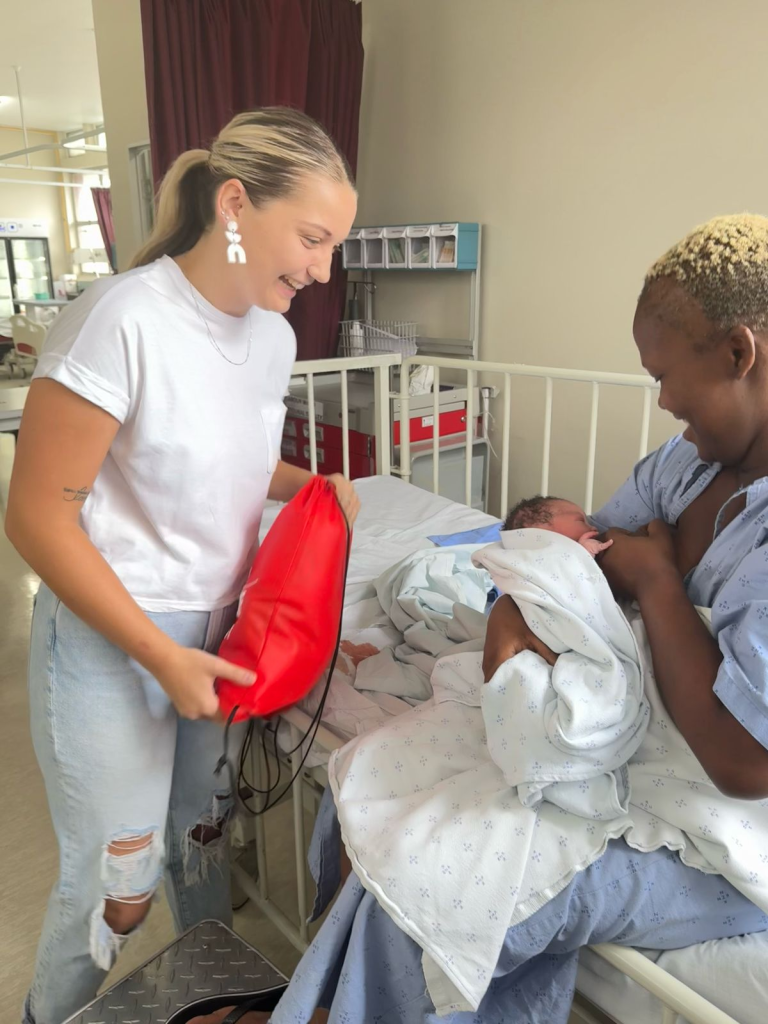
There is another way. We see it in our work when we take time to listen to women’s stories without judgement. When we offer compassion, reassurance and small acts of practical support. Items as small as a baby blanket or a packet of nappies. In those moments, hope takes root and many mothers choose to keep their babies and to ask for and accept help. This is the power of people seeing, hearing and supporting one another.
We call this approach the 3 C’s – compassion, counselling and connection. The 3 C’s are a simple, proactive, systemic intervention. Baby savers may save lives but in essence they are reactive. With so many abandonments each year, the problem can feel overwhelming, leading to drastic measures like baby savers. But the 3 C’s cost very little and are freely available to us all.
The results speak for themselves. We’ve worked with hundreds of mothers who have not only kept their babies, but found the courage to face families, partners, and communities they feared would reject them. We’ve seen fathers step up. Families once on the brink come back together. All because someone took the time to listen and care.
These stories don’t make headlines, so we forget the power of human kindness. We fall back on technology like baby boxes and laws and policies that punish the most vulnerable. But every time we help a mother back from the edge, we don’t just save a baby—we save a family. And we shift the course of many lives.
Having said all this, government must step up too. We urgently need to create viable, safe, non-judgemental and dignified alternatives to abandonment. This will involve training nurses and counsellors in hospitals and clinics. Here vulnerable women can be given impartial information and options for their baby. We need crisis lines that work and community health workers that are equipped with the knowledge to create environments where mothers are welcomed, not shamed. Whilst safe abandonment is still abandonment and hence illegal, government cannot simply ban baby savers without offering workable alternatives. Or at least support those organisations who are.
We must learn from other countries where mothers can legally and safely leave infants at police stations, hospitals, or fire stations, knowing the child will be cared for, and they’ll be supported in starting again.
If we want to prevent abandonment, we must go upstream and ask questions like: Why do women in crisis situations not know where to turn for support? If they do ask for help, what are they being told that results in them abandoning their baby? Why are they so fearful that a clandestine and criminal act seems like their only option?
Finally, we can’t say we care about children if we don’t care just as fiercely about their mothers. Every baby deserves a chance at life. Every mother deserves a chance at motherhood if that is her choice. And we can’t expect mothers in crisis to make good choices if we don’t give them any.
About The Author
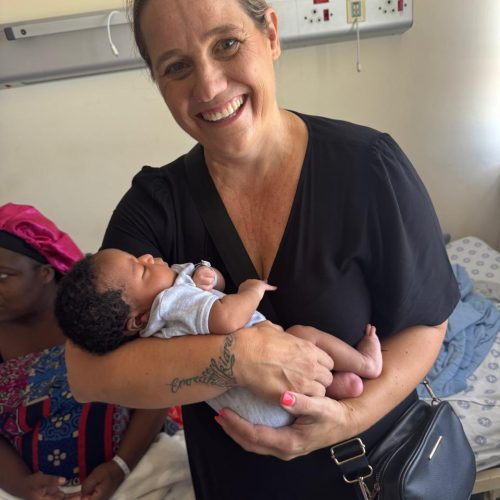
Joanne Teunissen is an advocate for vulnerable women and children and the director of the Durban North Baby Home, a place of safety for abandoned and vulnerable babies. She is also a founding member of Baby Line, a national counselling service for vulnerable women run by NGO The Peace Agency. With a deep belief in love, dignity, and second chances, Joanne and her team work to ensure that every child and every mother is seen, heard, and valued. To support or learn more, visit www.peaceagency.org.za